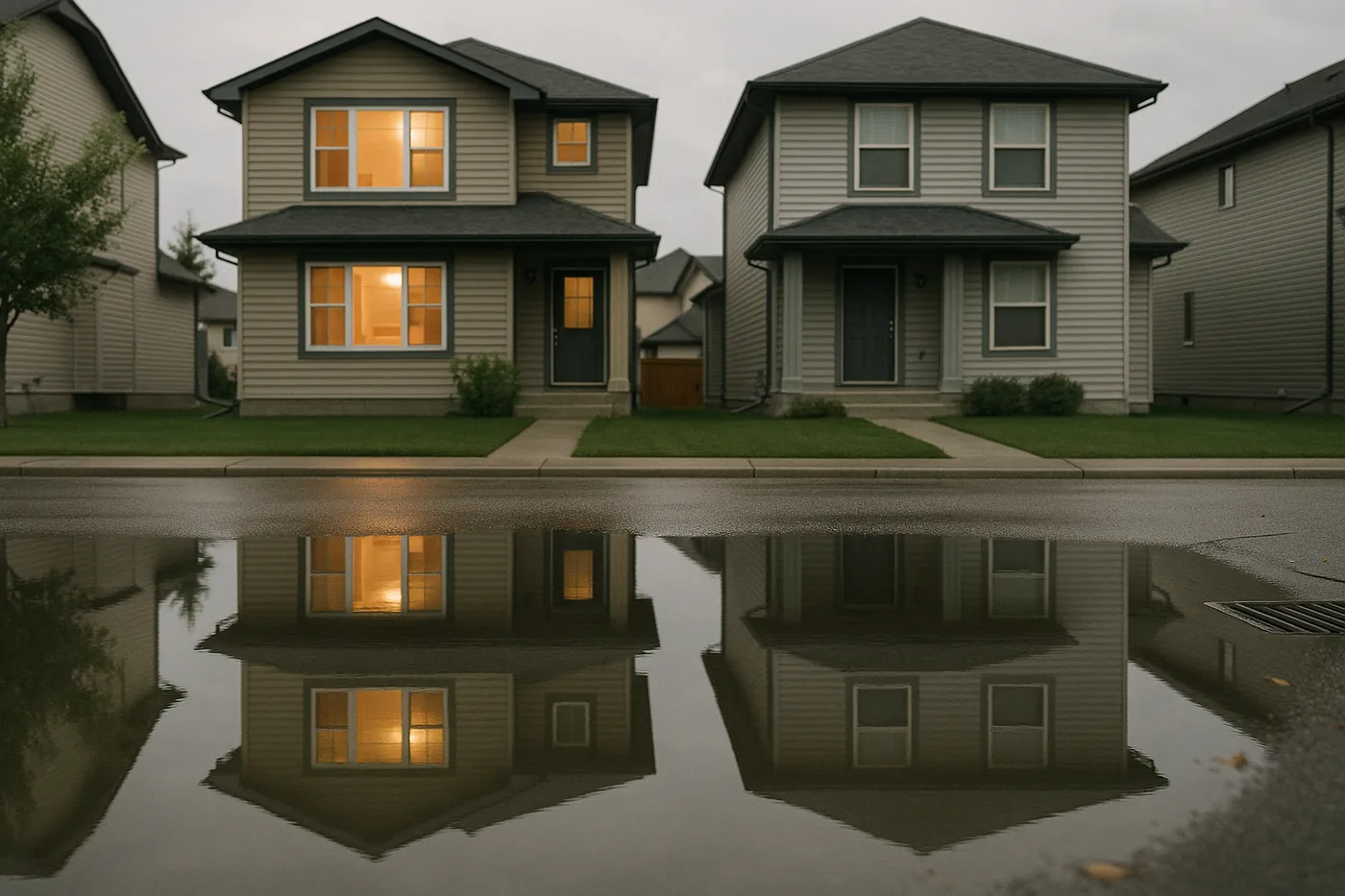
I get asked this a lot in late summer, when back-to-school buyers are moving fast and everyone is comparing notes. Two houses, same street, same size, same era. One sells in what feels like no time. The other sits. The owners of the second one usually think it is a pricing problem. Sometimes it is. Often it is not.
CREB's August 2026 report put the total residential benchmark price in Calgary at 9,800, with nearly four months of supply citywide. That number tells you the market overall still favours sellers, but it is an average across every community and every price band. It does not tell you why your specific listing is getting showings and no offers while the one two doors down went firm.
The first thing buyers actually notice
Buyers decide how they feel about a house in the first few seconds, before they read a single line of the listing description. That first impression comes from photos, and photos come from light, angle and how full or empty the rooms look. A house that photographs dark and cluttered gets scrolled past even if the bones are better than the competition. This has nothing to do with price and everything to do with how the listing was built.
I have walked enough Calgary basements over the years to know that condition matters, but staging and photography decide whether buyers ever get far enough to care about condition. A well lit, tidy, reasonably priced house draws a crowd. A dim one with the same price tag draws silence, and the seller reads that silence as "we are too expensive" when the real answer might be "nobody wanted to click past the front hall photo."
Pricing strategy is not one number
Some sellers pick a price based on what feels fair to them. That is not what buyers are comparing it to. A house priced to be the obvious best deal in its bracket gets multiple showings the first weekend. A house priced at what the seller hopes it is worth, rather than what it is actually worth against this month's competition, sits and gets stale. Buyers who are active right now have usually already toured several similar homes. They know the range. If your price sits outside it without a clear reason why, they simply move on to the next one.
This is where an agent earns their fee. Not by taking better photos, though that matters too, but by knowing what actually closed nearby in the last little while, not what a website's automated estimate says, and not what the house down the block sold for two years ago in a completely different market.
Condition still matters, just not the way sellers think
Buyers do not expect perfection. They do expect honesty. A seller who discloses a known issue and prices around it tends to do better than one who tries to hide it and hopes the home inspector misses it. Inspectors rarely miss much. When a defect surfaces mid-deal that should have been flagged earlier, it does not just cost money, it costs trust, and trust is what keeps a deal together through financing and closing.
If you are selling and unsure what a buyer's inspector is going to flag, that is a conversation for your own inspector before you list, not a guess. I always point sellers toward hiring someone independent to walk the property before it hits the market, so there are no surprises once an offer is on the table.
The part nobody wants to hear
Sometimes two houses on the same street get different results because one seller is more flexible on timing, deposit terms or possession date, and the other is not. Buyers in Calgary right now are dealing with their own moving pieces, school start dates, lease end dates, financing conditions. A seller who can bend a little on the parts that do not affect their bottom line often closes faster than one who holds firm on every single term out of principle.
None of this means price does not matter. It obviously does. But when a seller tells me their house should be selling and is not, price is only one of four or five things I look at, and it is rarely the only answer.
If you are trying to figure out why your own street has a listing that will not move, or you are getting ready to list and want to know what is actually closing nearby right now, I am happy to sit down and go through it. I am Rich Baldy with CIR Realty, and pulling real comparables beats guessing every time.