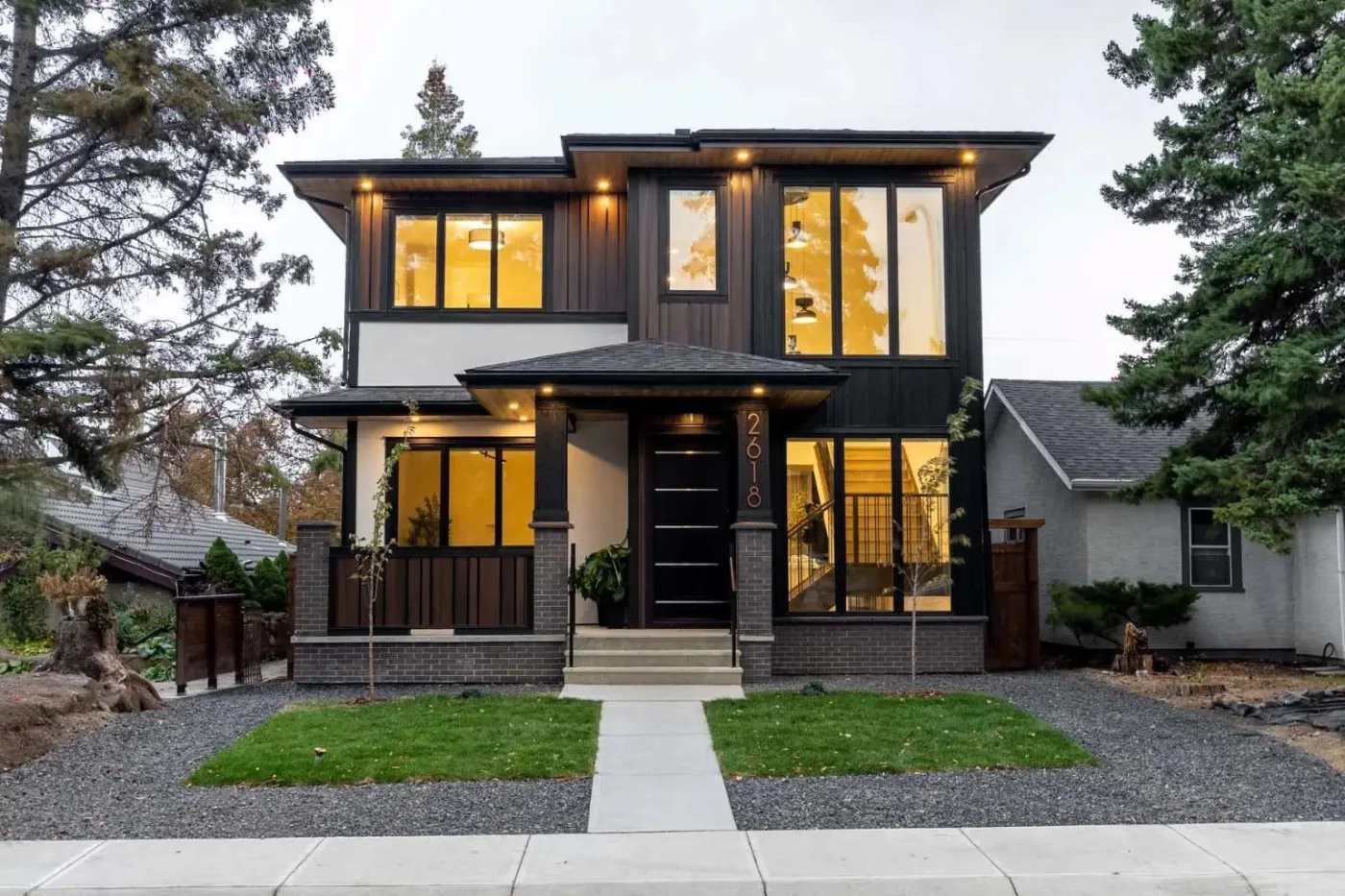
Walk through Killarney on a Saturday and look up first. Big old elms and spruce shade the yards. Then look at the houses under them. On one block you can see an original small home, the same kind of home renovated with a new roofline, and a skinny new two-storey where an old one used to stand. That mix is the neighbourhood right now. It will not stay this way forever.
Older Than Most of the City
Killarney's first subdivision plan was registered in 1906. The city annexed it in 1910.
That makes it older than most of the Calgary people picture when they think of this city.
Builders after the war put up hundreds of small stucco and clapboard houses here, on 25- and 50-foot lots.
Those houses set the scale of the streets. Modest homes. Real yards. Trees with room to grow.
Close Enough to Walk
Killarney sits southwest of downtown. You can walk or ride a bike into the core in well under the time most suburbs spend getting there.
Westbrook Village sits at the edge of the community, with an LRT station that puts you downtown without starting a car.
A weekend here can mean a walk under the trees, a bike ride, and leaving the car parked.
That has been the appeal of Killarney for a long time. It is also why the land under the old houses is worth so much.
Two Ways to Buy Here
Over the years, a good share of Killarney lots have sold not for the house on them but for what could replace it.
Builders see a lot close to downtown and do the math on two skinny infills instead of one old house. More often than not, the math works for them.
If you are buying here, you need to know which kind of buyer you are.
If you want the house, look at the renovated originals or the newer infills. You are paying for finished space and a short trip downtown.
If you are buying to build, you want the tired house on the deep lot. The house itself is close to worthless to you.
Those are two different shopping lists. Buyers mix them up all the time. They fall for a bungalow's charm, then learn the price assumed they would tear it down.
The Trees Are the Part People Miss
A mature elm or spruce on an old Killarney lot took decades to get that size.
No landscaping budget on a new build buys that back on any timeline that matters to you.
When an old house comes down, the tree often goes with it. There is no room left to build around the roots.
If a mature yard matters to you, look harder at the untouched blocks.
The Trade-Off: A Street That Keeps Changing
Since about 2002, the original houses have been replaced piece by piece with low- and medium-density infill.
That changes a street's feel over a few years, not overnight. A block that is half original homes today might be mostly new builds down the road.
That is not automatically bad. New infills bring young families and newer homes. Killarney has absorbed this change before and stayed walkable.
But you should know what you are buying into before you sign. Ask early, before you fall for a listing photo, whether the lot next door has already sold to a builder.
Killarney also has an area redevelopment plan. It is worth reading if you care what could go up beside you.
What I Would Ask Before You Buy Here
I am not going to tell you Killarney is undervalued, or that you are getting in before some wave. I do not know that. Anyone who tells you they do is guessing.
What I can tell you is that the basics here have held for decades. It is close to downtown. It is walkable. Land close to downtown does not get less scarce over time.
Whether a specific house or lot is priced fairly is a separate question. Ask it before you write an offer, not after.
If you are weighing a renovated original against a lot to build on in Killarney, or just want to understand how a street has changed, I am happy to pull what has sold nearby and talk through what it tells you. I am Rich Baldy with CIR Realty, and that comparison is usually worth more than any listing description.