Aspen Woods is a newer community, built on land that was farmland and acreage country for decades before anyone put in curbs and sidewalks. When the builders finally came, they came all at once, with modern lot sizes and modern floor plans, on land that had never carried a bungalow or a war-time infill. That is the whole character of the place in one sentence: it skipped the middle of Calgary's history and went straight from field to estate home.
You can see this walking the streets: mostly detached homes, few row houses or condos. Most homes here are detached, with fewer row houses or apartments than you'd find in many newer Calgary communities. Most communities built in the same era added more density as they filled in. Aspen Woods kept leaning toward single-family lots, which is why the streets feel wide and the houses feel large. You are not squeezing past your neighbour's fence here the way you do in some of Calgary's older infill blocks.
What You Are Actually Buying
The appeal is obvious from the curb. These are newer builds, many with the kind of square footage and finishing that older Calgary stock simply was not designed to offer. Big primary bedrooms, open kitchens, three-car garages are common. The yards tend to be generous too, especially compared to the skinny lots going up in infill neighbourhoods closer to downtown. If you want space, inside and outside, without taking on an acreage, this is one of the places in the city built specifically for that.
It sits alongside West Springs, Springbank Hill and Signal Hill, three communities with a similar story: newer builds, bigger lots, families who wanted room on the west side of the city. Together they form a stretch where you can tell, almost block by block, when the development pushed further out.
The Trade-Offs to Know Before You Buy
Here is the honest part, and it is not a mystery. You are buying distance from the core. A community built on former farmland out this way is, by definition, further out than the neighbourhoods that filled in earlier. The drive downtown is longer than it is from the inner city. If you work downtown five days a week, that adds up over a year in a way the listing photos never mention.
The other cost is the school run. Newer communities out this way often grow faster than the schools built to serve them, so catchment and capacity can shift. Ask about this before you buy, not after. Call the school board directly and get a straight answer on catchment and capacity for the specific address, not the general area.
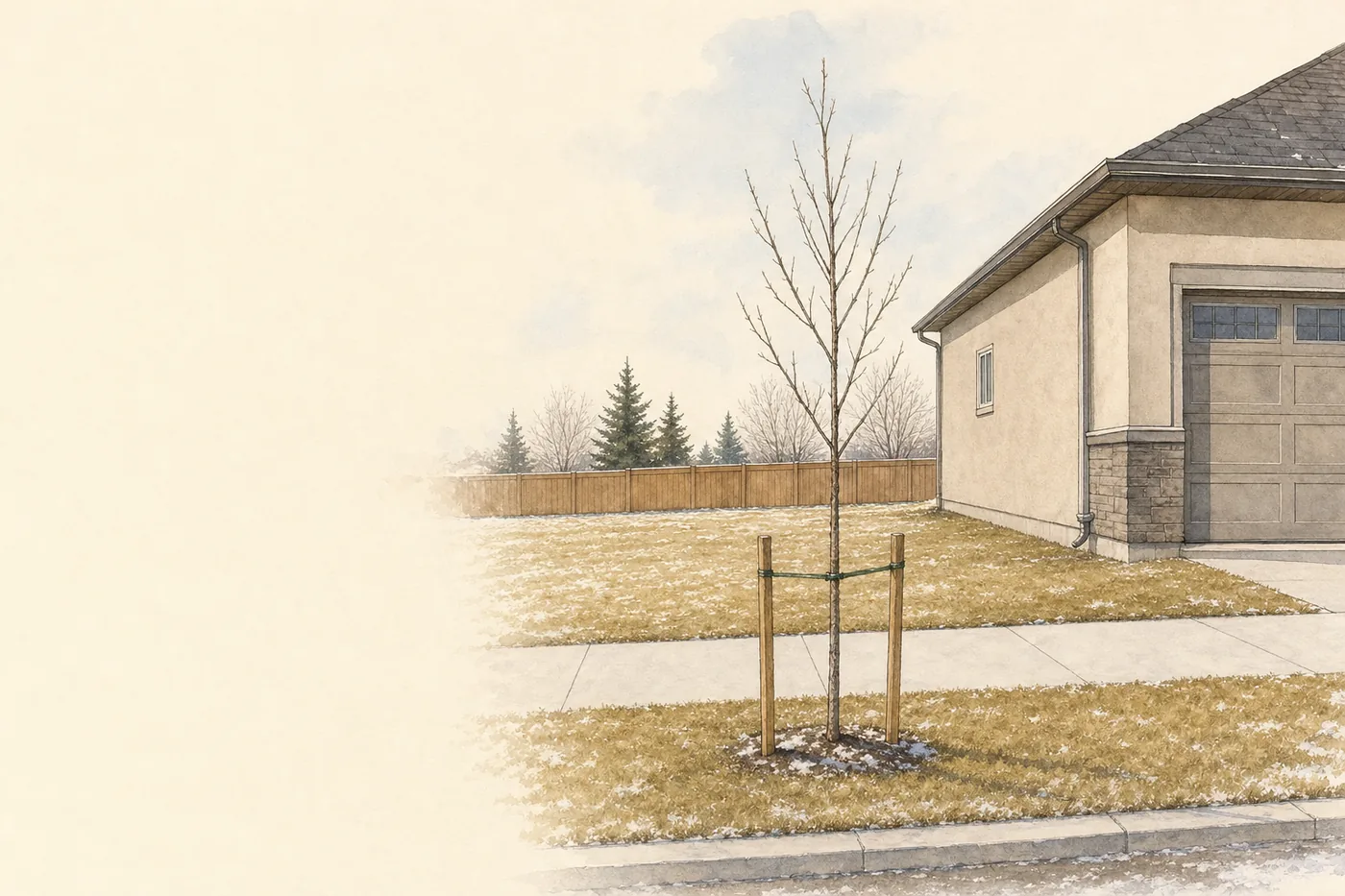
There is one more trade worth naming honestly, and it has nothing to do with roads. Because the land here was farmland until fairly recently, there is no mature tree canopy the way there is in Mount Royal or Elbow Park. The landscaping is younger. Give it another twenty or thirty years and the boulevards will fill in. Right now, a lot of the yards here are bright and open rather than shaded, which some buyers love and others find stark. Know which one you are before you commit.
A busy road does run along the edge of the community, and if you are looking at homes near it, ask about noise before you fall for the floor plan. That is a one-line caution, not the headline. The headline is still the land itself: big lots, new houses, room to spread out.
Who Should Skip It
If you want to walk to work, or you want mature trees over your driveway on day one, this is not your community. If you are allergic to driving and want transit close by, you will spend more time behind the wheel here than you expect. But if you want new construction, generous square footage and a yard with actual room in it, and you are fine trading some drive time for that, Aspen Woods delivers exactly what it was built to deliver.
If you are weighing Aspen Woods against West Springs or Springbank Hill, I am happy to pull what comparable homes have sold for across all three and talk through which trade fits your commute and your family best. I'm Rich Baldy with CIR Realty, and that conversation costs you nothing but a bit of time.
