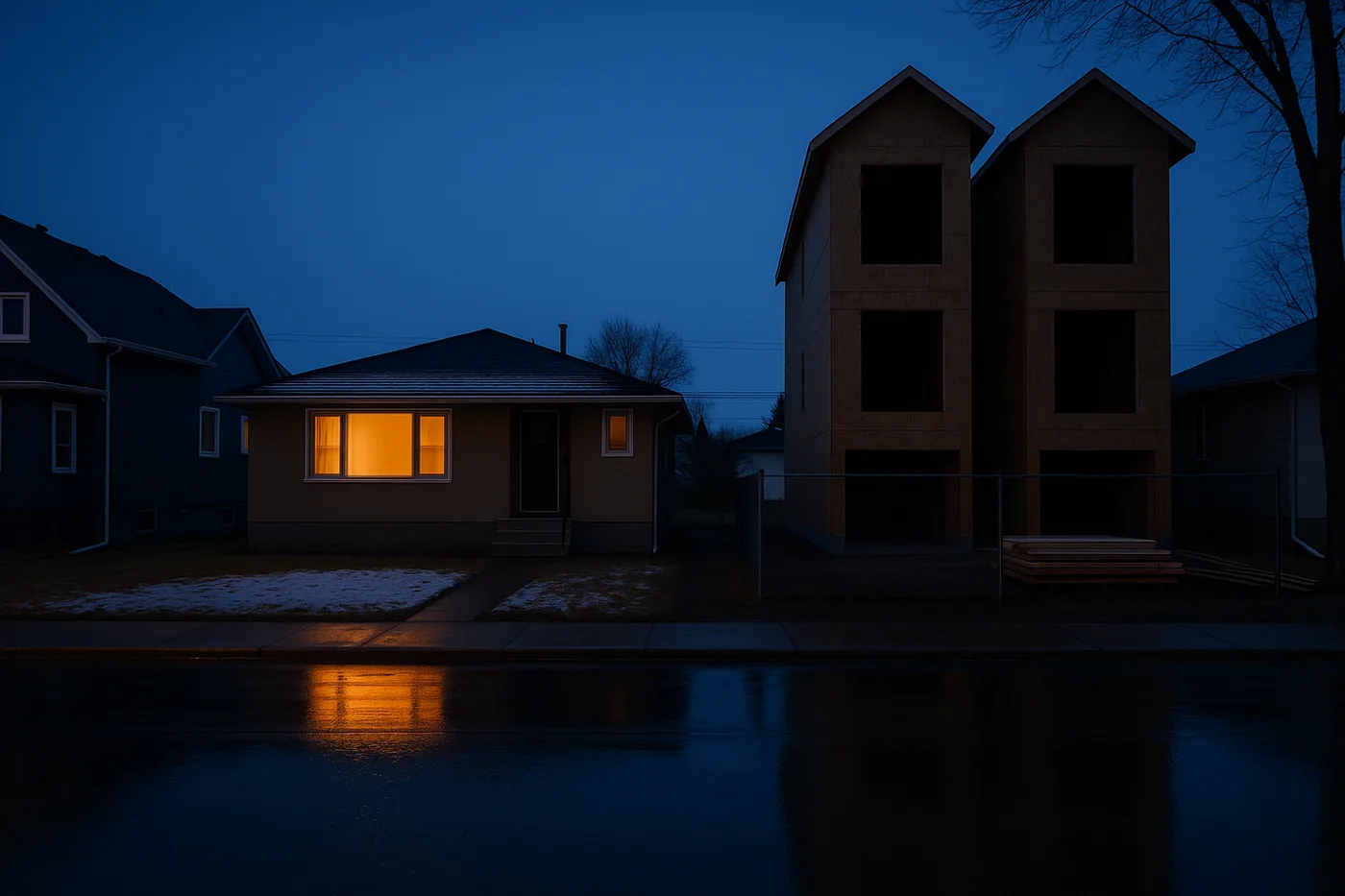
Ask a Calgarian what they know about Bowness and you get one of two answers. Either they went tubing down the river there as a kid, or they have no idea it exists. Both answers tell you something.
Bowness sits west of downtown, tucked along the Bow River with Bowness Park on one edge and the hills toward Canada Olympic Park on the other. It has been a community a long time. You can feel that in the housing stock: older bungalows on wide lots, a mix of postwar homes and newer infill going up where the old ones came down. It never got the inner city polish that hit Sunnyside or Bridgeland. That is most of why it still costs less.
What you actually buy
You are not buying proximity to trendy coffee shops, though a few have shown up. You are buying river access, a big park with a lagoon and a hill for tobogganing, and a genuine sense that people have lived here a long time and plan to keep living here. The lots tend to be bigger than what you find in communities closer to the core. That is part of why builders keep circling. Where you see one older bungalow sell, do not be surprised to see two skinny infills go up in its place within a year or two.
The commute is the honest trade-off. Getting downtown means Bow Trail or Sarcee Trail, and either way you are looking at real drive time, not a quick hop. If your job lets you work from home most days, that trade barely registers. If you are downtown five days a week, budget the time and be honest with yourself about whether you will resent it in February when the roads are worse.
Why the price still lags
Calgary's overall benchmark price sat at 9,800 in CREB's August 2026 report. I bring that up not because Bowness prices to that number exactly, community pricing never lines up neatly with a city-wide benchmark, but because it gives you a yardstick. Bowness homes, especially the older bungalows that have not been touched, still tend to land under that mark. Newer infill in the same community prices closer to it or past it. That gap between the old stock and the new stock is wider here than in a lot of other west side communities, and it is worth understanding before you fall for a listing photo.
Part of the reason the older homes lag is straightforward: they are older. Original electrical, original windows, and in some cases the kind of foundation quirks you expect from a community built on river valley soil. None of that makes a home a bad buy. It makes it a home where your inspection matters more than the listing description does. A home's age tells you what to expect, not what you will actually find. Only a proper inspection tells you that.
Who Bowness actually suits
I see two kinds of buyers land here. First timers who want a real yard and river access and are willing to trade some drive time for it. And people planning to hold land, whether that means living in the older home for a while or eventually building new. Both are reasonable plans. What does not work well is buying here expecting the same walkability you get in Kensington or Marda Loop. Bowness has a village strip along Bowness Road, not a walkable district. If that is what you are after, look elsewhere.
The community is changing. More infill each year, more young families, a park that gets busier every summer. Whether that changes the price gap between Bowness and its neighbours is not something I can predict with a straight face. My honest read is that the gap narrows slowly, not fast, because the commute is a real cost that does not disappear just because the housing gets nicer.
If you are curious whether Bowness fits what you are trying to do, I am happy to pull what similar homes have actually sold for and talk through where the value sits versus other west side communities. That conversation is worth more than any listing photo. I'm Rich Baldy with CIR Realty, and that comparison is one I run often.