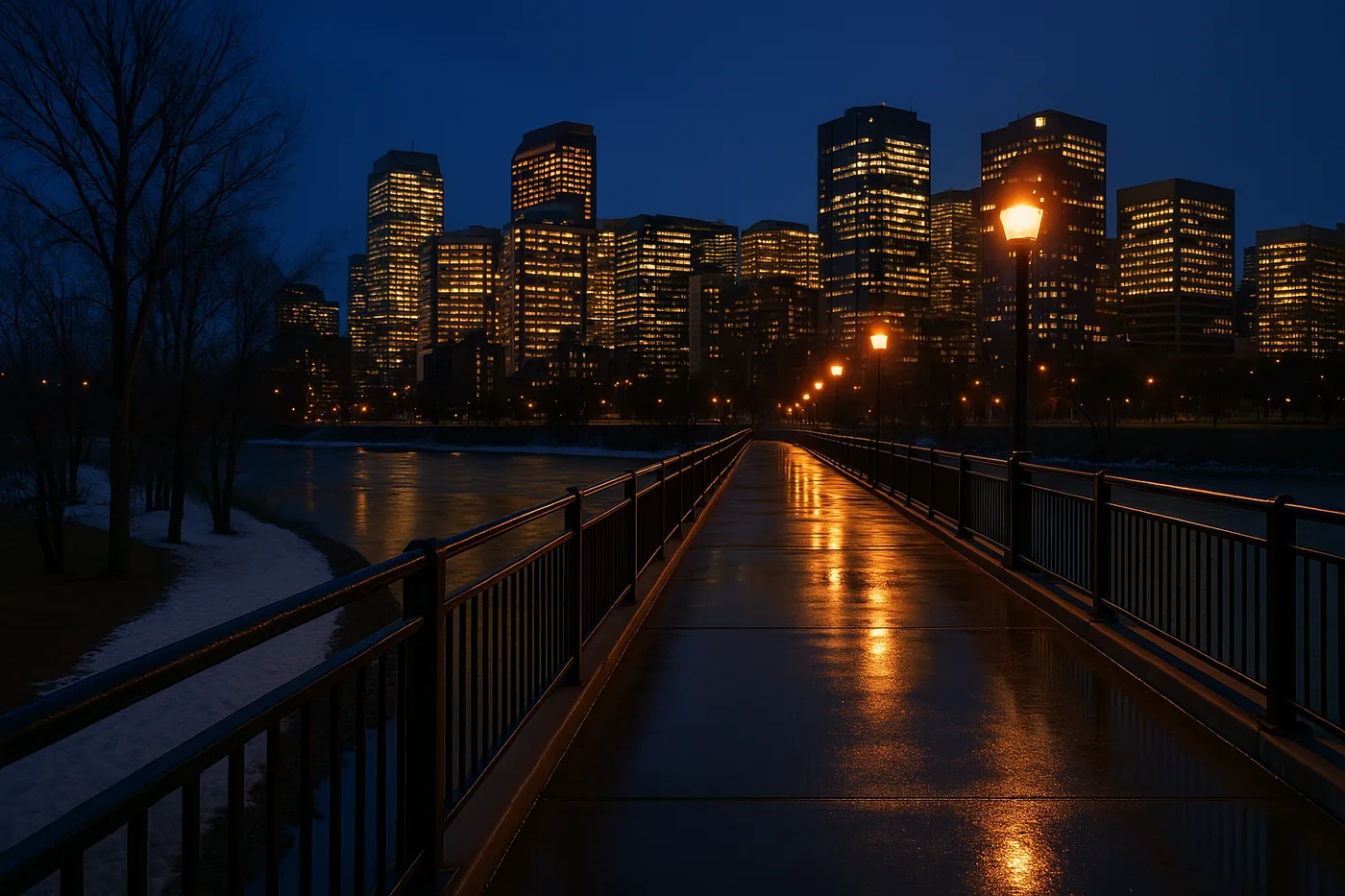
Sunnyside is the community that sits across the river from downtown, tucked under the Sunnyside LRT station, a few blocks from Kensington's shops and restaurants. It is small. It is old. And it is one of the only places in Calgary where a buyer can honestly say they do not need a car, then mean it.
That is the whole pitch. Not the river pathway, not the character homes, not the proximity to the university, although all of that helps. The pitch is the walk. Fifteen or twenty minutes on foot and you are at your desk downtown. No LRT transfer, no parking stall to rent, no dealing with a weekday morning when bridge traffic backs up.
What that walk is worth
People underestimate what a car actually costs them over a year: insurance, gas, parking downtown if you drive in, the stall itself if your building charges for one. Cut that out and you have real money, every month, whether or not you ever run the numbers on paper. Sunnyside lets a certain kind of buyer, usually someone working downtown without kids in tow, actually cut it out.
CREB's August 2026 report put the total residential benchmark price for Calgary at 9,800. Sunnyside runs above that for anything with a yard, and the apartment condos in the community, the older low-rises near 10th Street, tend to sit above the citywide condo benchmark of 5,400 too. You are not getting a deal here. You are paying for the location, and the location is the product.
What you actually get for the money
The housing stock is a mix. Some genuine character homes, some of the oldest in the city, narrow lots, small yards, and beside them a run of newer infill built more recently, tighter and taller. Very few big lots left. If you want a yard for a trampoline and a dog that needs room to run, Sunnyside is not it. If you want to walk to a coffee shop, catch a Flames game without driving, and never think about winter tires again, it starts to make a lot of sense.
The community also sits close to the river, which people love until they think about it for more than a minute. It is worth knowing what floodway and flood fringe designations apply to a specific address before you fall for a house here, and worth asking your realtor to pull that history rather than assuming a nice renovation means the risk went away.
The trade-offs nobody puts in the listing photos
- Street parking gets tight, especially near the LRT station and on game nights.
- Train noise is real for the blocks closest to the tracks, not a dealbreaker for most people but worth standing on the street and listening for yourself before you write an offer.
- Lot sizes are small enough that a lot of the character homes have no real yard to speak of, just a patio or a strip of grass.
- Older homes in this pocket of the city can carry the same issues you find across Calgary's inner city, aging wiring, original plumbing, foundations that have moved a little on our clay soil. None of that is a Sunnyside problem specifically. It is an old-house problem, and it is exactly why a licensed inspector matters more here than it does on a newer build in the suburbs.
Who it actually suits
I think Sunnyside works best for a single buyer or a couple, both working downtown or close to it, who genuinely do not want a car-dependent life. It works less well for a young family who thinks they will grow into the space, because there usually is not much space to grow into. I would rather say that plainly than have someone buy the location and resent the square footage two years later.
If you are weighing a walkable inner city community like Sunnyside against something further out with more house for the money, that is a real trade-off worth running the numbers on, not just a vibe. Happy to pull what comparable homes in Sunnyside and a couple of alternative communities have actually sold for, so you are deciding with real numbers instead of a feeling about the commute. Richard Baldy, REALTOR with CIR Realty.