Drive through Elbow Park or Mount Royal this time of year, late September, leaves turning, and you notice the thing that never shows up on a listing sheet. Canopy. Elms that meet over the street. Yards that feel finished, even bare for winter, because the bones of them were planted before most of the houses changed hands even once.
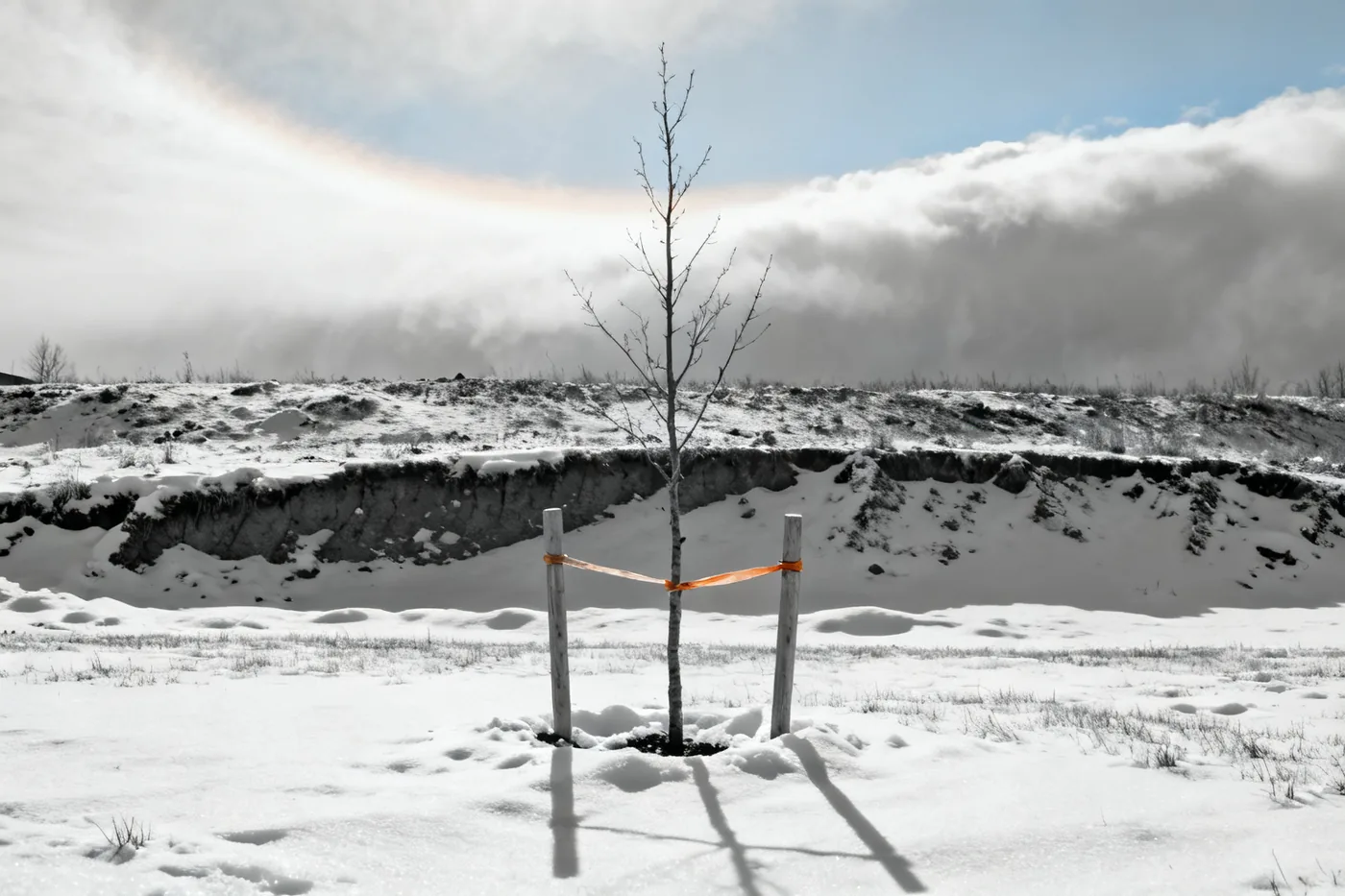
Now drive to a new-build community on the edge of the city. Same month. The sod is still green because it was laid in the spring and it has not had a real Calgary winter yet. The one tree on the lot is staked to a post because it cannot hold itself up. That tree will be a tree in thirty years. It is not one now.
Most buyers do not think about this until they are standing in the yard: you cannot buy a mature yard. You can only buy the house that comes with one already grown.
Our growing season does not help
Calgary gives a yard something like four months to work with in a good year, and some summers bring watering restrictions on top of that. Grass, shrubs, anything you plant from a garden centre, it all grows slower here than it does in a city with a real spring and a real summer back to back. A new-build lot is not just short on time. It is short on the kind of season that would let it catch up quickly even if you tried.
That is why the gap between a fifty-year-old yard and a five-year-old one in this city is wider than the same gap somewhere with a longer growing season. Ours does not close on its own.
What's in the price
CREB's August 2026 report put the total residential benchmark price in Calgary at 9,800. The apartment condominium benchmark that same month was 5,400. That gap is not just square footage and parking. Somewhere in there is the fact that one of those numbers usually comes with a yard, mature or not, and the other one almost never does.
Within the house side of the market, the same logic holds at a smaller scale. A postwar bungalow in Renfrew or Bowness with a sixty-year-old spruce and a yard that has settled into itself will often carry a premium over a similar-sized house two blocks away with a yard that was regraded ten years ago. The bones of the house might be nearly the same. The yard is not, and buyers feel it even when they cannot say why.
The pattern I see
Buyers tour a new-build lot and like the fresh sod. It looks tidy, it looks done, and it photographs well. Then they walk through an older bungalow with a kitchen that needs work and a yard with real shade, and they ask me why it costs more. The honest answer is the yard is doing quiet work in that price that the kitchen is not.
The mistake I see most often is treating a yard like a feature you can add later, the way you'd add a fence or repave a driveway. You can plant a tree next spring. You will not be sitting under it. Whoever buys the house from you in twenty years might.
- A mature yard is one of the few things in a house you truly cannot renovate into existence
- New-build lots start behind and the growing season here does not let them catch up fast
- The premium on an older, treed community is partly the yard, even when nobody prices it as a separate line
None of this means skip the new build. Plenty of buyers want the warranty, the layout, the fact that nothing behind the walls has seen sixty Calgary winters. That is a fair trade to make with eyes open. What I do not want is a buyer standing in a bare new-build yard in October, disappointed it does not feel like the bungalow they saw the week before, without understanding why.
I'm Rich Baldy, a REALTOR with CIR Realty here in Calgary. If you are weighing an older community against a newer one and the yard is part of what is pulling you one way, I am happy to pull what similar homes have actually sold for in both, so the decision is about real numbers and not just a feeling on a walk-through.